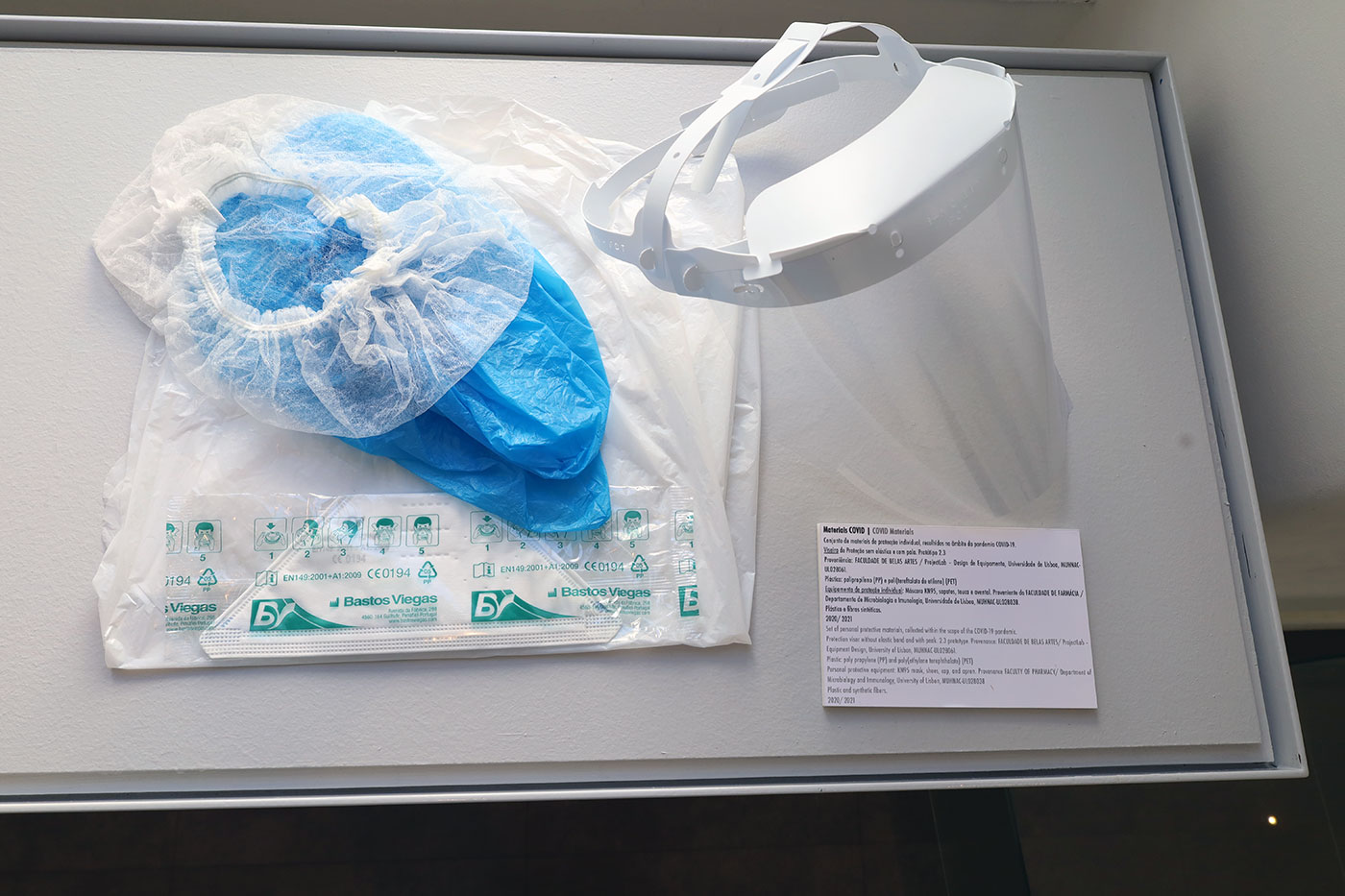
HERIT-AGES:
Vitreous transitions
With over 5000 years of history, glass is something common in our daily lives. Plastic, which emerged much later, is also present everywhere and is produced in larger quantities than older materials. Indications suggest that in Portugal, the development of the plastic industry stemmed from the existing glass industry, leveraging the expertise and skills of its workers. Currently, plastic is highly visible due to its negative impact on the environment, while glass, although widely used with significant technical advancements, has not received the same amount of attention from the public.
The term "Glass Transition," which gives its name to the exhibition, is a specific temperature range in which both glasses and plastics transition from a solid state to a viscous state.
The HERIT-AGES: Vitreous Transitions exhibition aims to present the results of an exploratory research on the relationships between the glass and plastic industries, as well as to reflect on how the presence of these materials in museums can influence future generations' perspectives on our current time.
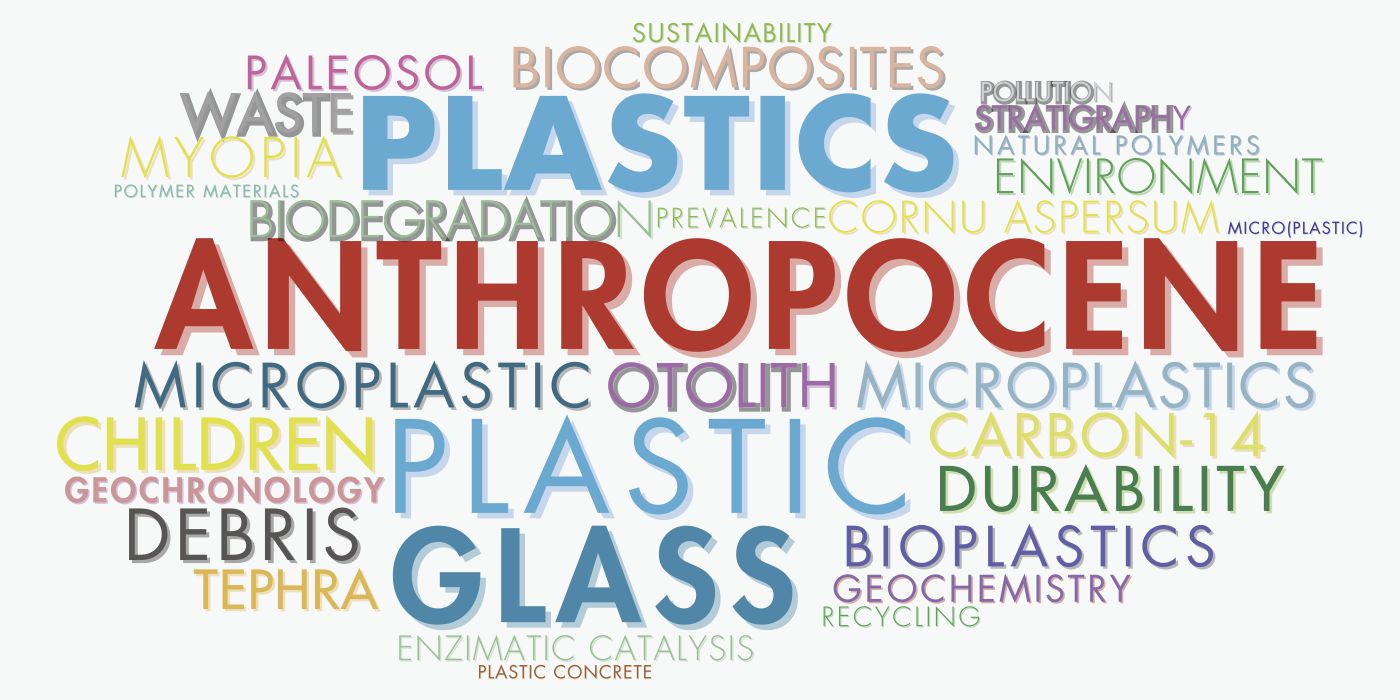
Ages of History
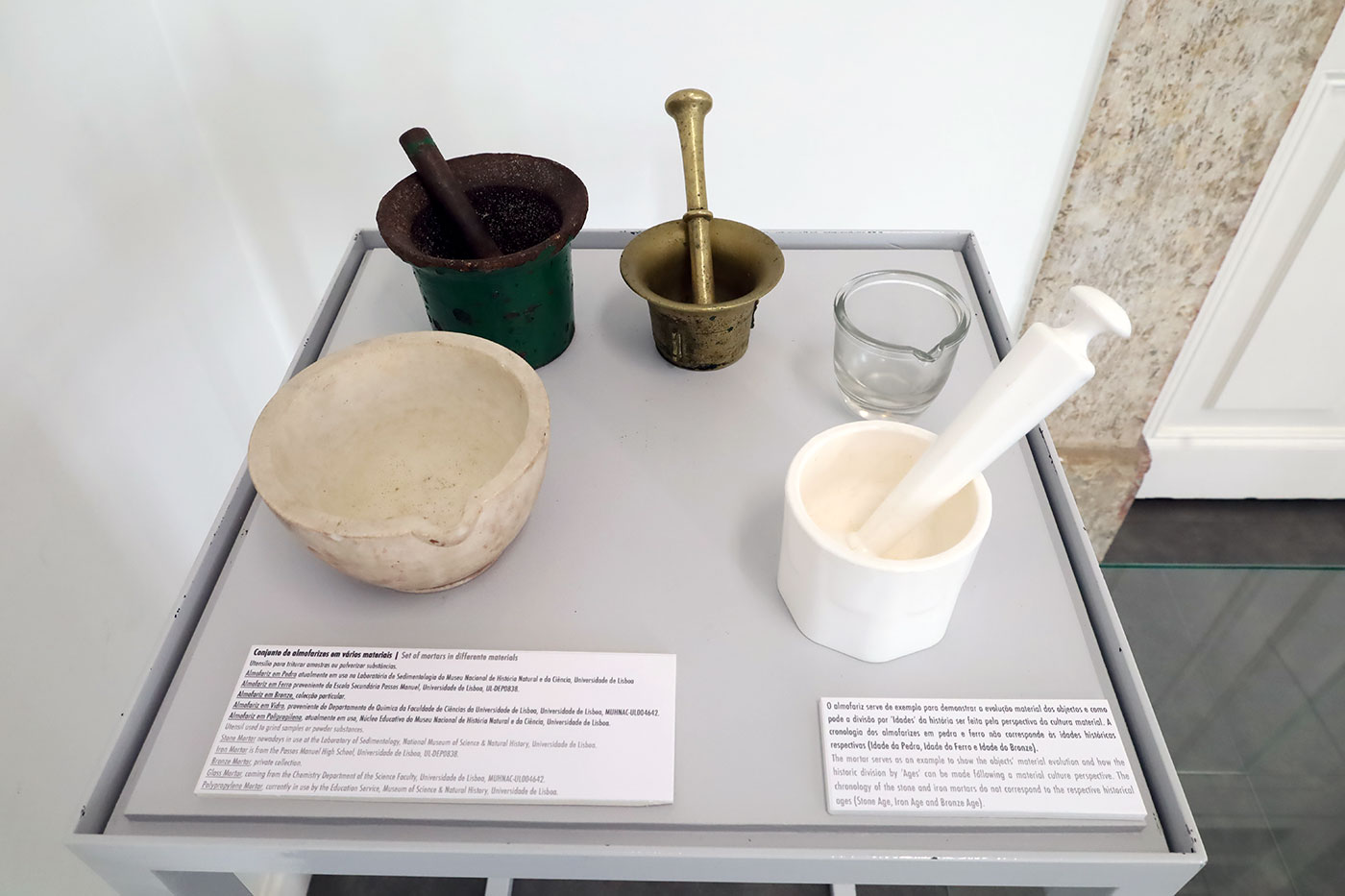
An important classification relating time with the use and evolution of materials was made by Christian Jurgensen Thomsen in the 19th century. With the aim of organizing the collections of the Danish National Museum, he proposed a division based on technological progress. Thomsen argued that more primitive materials were replaced by more advanced materials and classified the museum's collections into objects made of stone, bronze, and iron, thus creating the system of the three ages: Stone Age, Bronze Age, and Iron Age.
This leads us to some questions: In which age are we now? Which material currently holds greater prominence? Which perspective makes more sense, the one of technological progress or geological impact?
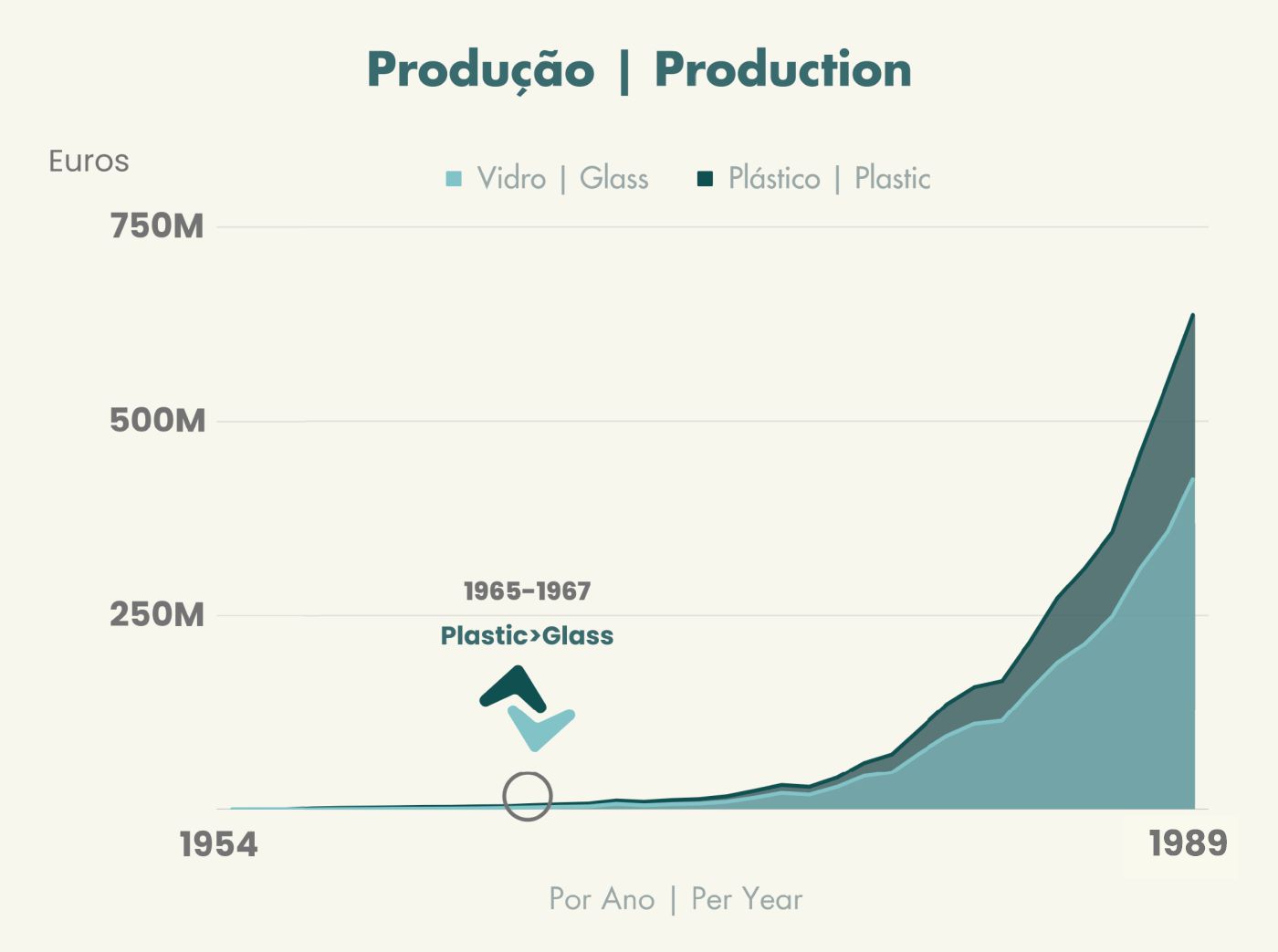
Industry
Glass has been produced in molds for at least 2500 years. Initially, the molds were crafted from wood and heat-resistant clay, evolving over time. In the 19th century, cast iron molds gained prominence, followed by steel molds in the 20th century. During this period, Portuguese manufacturers recognized the potential of plastic and began utilizing steel molds for plastic object production, starting in the 1930s.
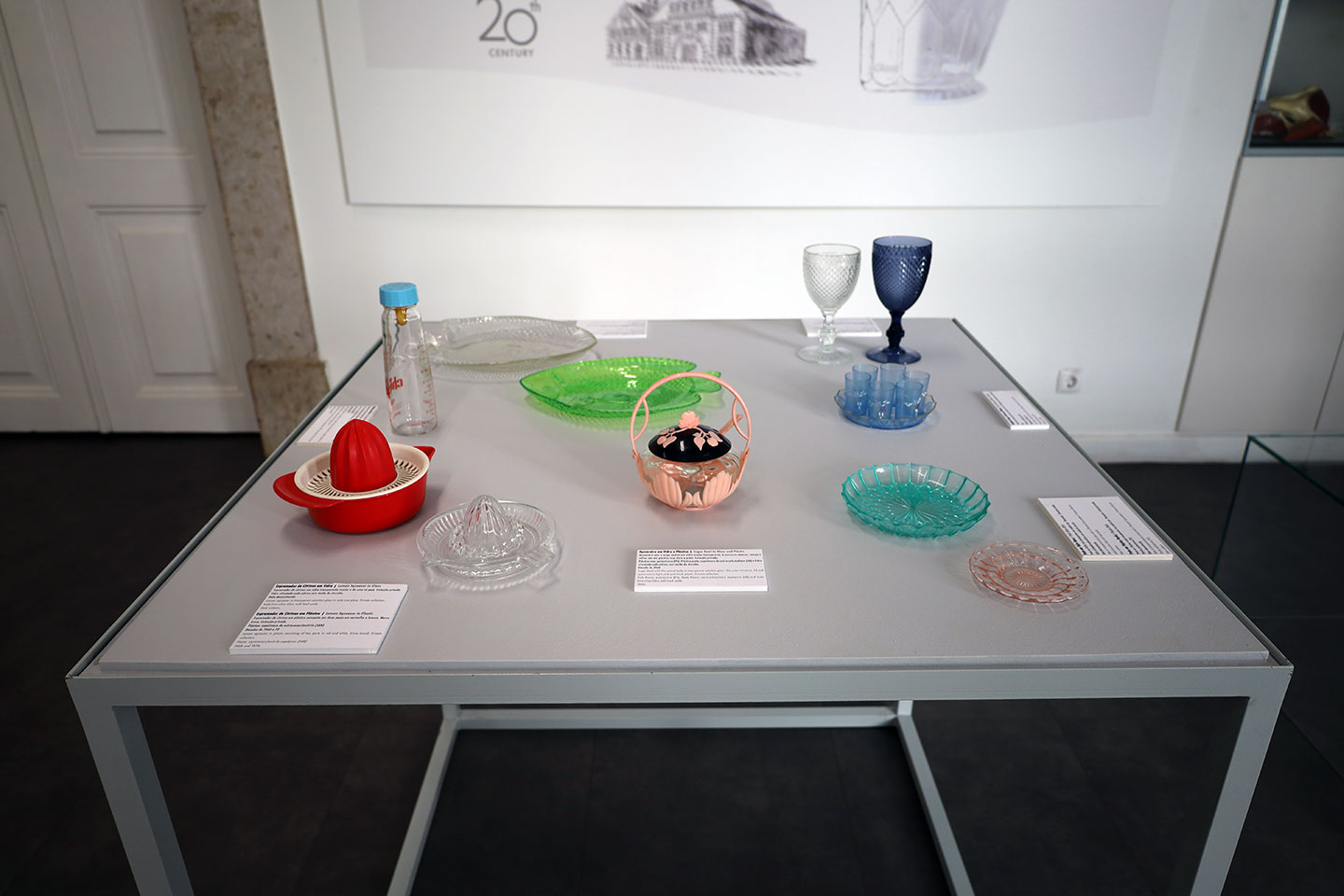
This moment marked the connection between the glass and plastic industries through a third industry: the molds industry. From then on, plastic objects resembling the shapes, functions, and decorations found in glass began to emerge. Glass and plastic started to coexist, both becoming available to consumers.
Daily life
Upon closer observation, it becomes evident that the properties of glass and plastic enable their usage for similar purposes, despite having also some distinct characteristics. From the 1930s onwards, plastic materials started replacing other materials, like glass, due to factors such as lower cost, greater lightness, enhanced durability, and a more modern look. These materials gradually infiltrated people's homes and became part of their collective imaginary. Numerous examples can be found in various aspects of material culture, including the objects themselves, advertisements, and even films.
Heritage
Does the definition of Ages influence what museums decide to incorporate and preserve?
As a predecessor and successor in many objects, how will glass be preserved and managed throughout history?
Stemming from its excessive use, how will the aversion to plastic impact the museological preservation of this material?
How will glass and plastic objects be portrayed in history?
We know that decision-making is never context free. All decisions are based on how we perceive and interpret the world. Based on this idea, we wonder how our current context, highly focused on environmental issues and the pursuit of a more sustainable society, is affecting the preservation of plastic and glass heritage.